
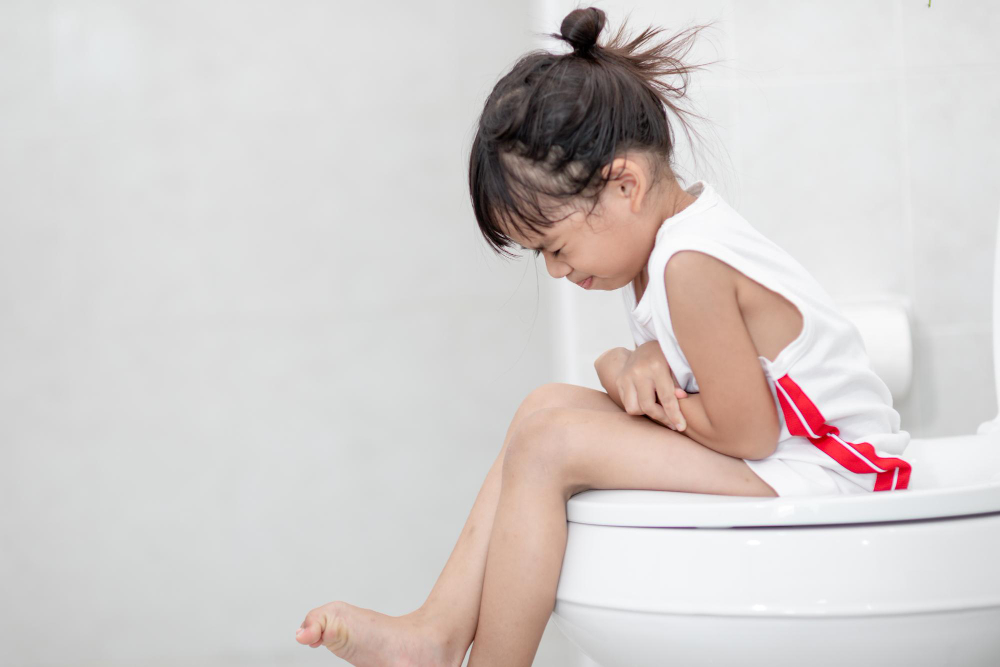
What Is Constipation in Children?
Constipation in children means your child has trouble passing stools. Often, stools become hard, dry, and difficult to pass. Many children may go days without a bowel movement. In the US, constipation in children is a common concern for parents and caregivers. Usually, a child is considered constipated if they have fewer than three bowel movements per week.
Common Symptoms of Constipation in Children
Recognizing the signs early can help your child feel better sooner. For example, some children may not complain, but you can watch for these symptoms:
Sometimes, children may avoid using the bathroom because of pain. As a result, the problem can get worse.
Main Causes and Risk Factors
There are many reasons why constipation in children happens. Understanding these causes can help you prevent it. Some common causes include:
Additionally, children who are learning to use the toilet may hold in their stool. This can lead to constipation.
How Is Constipation in Children Diagnosed?
Doctors use several steps to diagnose constipation in children. First, they ask about your child’s symptoms and bathroom habits. Next, they may perform a gentle physical exam. Sometimes, doctors ask about your child’s diet and daily routine. In some cases, they may order tests, such as:
Usually, most cases do not need many tests. However, if constipation lasts a long time or is severe, more checks may be needed.
Effective Treatments for Child Constipation
There are many ways to help a constipated child. Treatment depends on the cause and how severe the problem is. Here are some effective options:
Home Remedies
Sometimes, simple changes can make a big difference. However, if these steps do not help, you may need medical advice.
Medical Treatments
Never give your child over-the-counter laxatives without talking to a doctor first.
Lifestyle and Dietary Tips for Prevention
Preventing constipation in children is possible with a few healthy habits. For instance, you can:
With these steps, you can lower the risk of constipation and help your child feel better.
When to See a Pediatrician
Sometimes, constipation in children needs medical care. You should contact a pediatrician if your child:
Early treatment can prevent complications. Therefore, do not wait if you are worried.
Conclusion
Constipation in children is common, but it can be managed with the right steps. By knowing the causes, symptoms, and treatments, you can help your child feel better. If your child is experiencing constipation, consult a pediatrician for personalized advice.